Your Next Chapter Starts Here

Talent Mobility
Moving Skills Across Roles Within Your Business
11/28/20252 min read
Introduction
In a constantly evolving business landscape, agility is key. Organisations often focus on external recruitment to bring in new ideas, skills, and perspectives. However, there’s a valuable, often underused strategy that can be equally — if not more — effective: talent mobility.
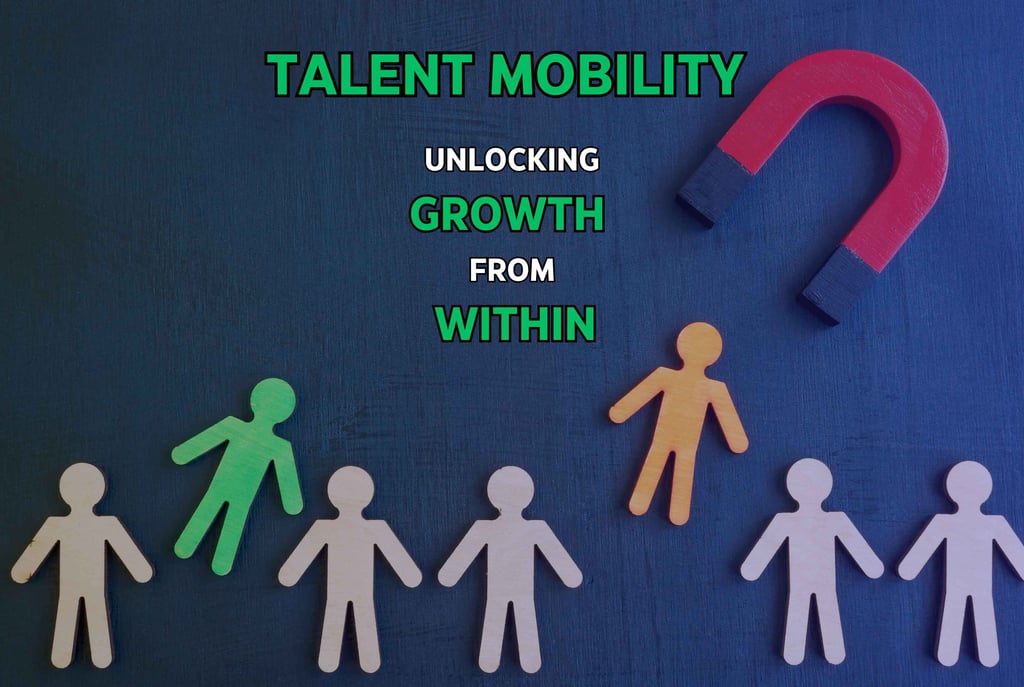
Talent mobility is the practice of moving employees across roles, functions, or even geographies within the organisation. It’s about giving people opportunities to grow, apply their potential in new ways, and fill business needs dynamically. By doing so, companies can strengthen retention, close skill gaps, and build a more versatile, future-ready workforce.
1. What Does Talent Mobility Really Mean?
Talent mobility goes beyond promotions or departmental transfers. It includes lateral moves, short-term project assignments, or rotational roles that allow employees to explore different aspects of the business.
For employers, it ensures that skills and expertise are allocated where they’re most needed. For employees, it provides fresh challenges and continuous learning — fostering loyalty and satisfaction.
This approach reflects a mindset shift: from “who can we hire?” to “who can we grow?”
2. The Business Case for Talent Mobility
Organisations that embrace internal movement experience tangible benefits:
Stronger Retention: When employees see visible career pathways and growth opportunities, they’re far more likely to stay.
Cost Efficiency: Promoting or reassigning internal talent reduces recruitment costs, onboarding time, and training expenses.
Cultural Continuity: Internal hires already understand company values, systems, and culture, leading to smoother transitions.
Enhanced Collaboration: Cross-functional exposure encourages empathy, communication, and innovation across teams.
Faster Adaptability: As business needs shift, mobile employees can help re-balance capabilities quickly.
In short, talent mobility helps organisations stay lean, agile, and resilient — especially in industries facing rapid transformation.
3. Implementing an Effective Talent Mobility Strategy
Building an internal mobility framework requires intent and structure. Some key steps include:
Skills Mapping: Start by understanding the existing skills in your workforce and where the gaps lie. Modern HR systems can make this mapping more accurate and dynamic.
Create Clear Pathways: Develop transparent career maps that show how employees can progress or pivot across different roles.
Encourage Open Conversations: Managers should regularly discuss aspirations and development goals with their teams.
Provide Learning Opportunities: Invest in upskilling and cross-functional training to prepare employees for lateral or vertical moves.
Recognise and Reward Movement: Celebrate internal transfers and make them part of your success culture.
A well-designed talent mobility programme combines visibility, fairness, and trust — ensuring employees feel empowered to explore new directions without fear of being “boxed in.”
4. Overcoming Common Challenges
While the concept sounds simple, talent mobility requires careful management.
Managerial Resistance: Some leaders may be reluctant to let go of top performers. Overcoming this requires a cultural shift towards what’s best for the organisation overall.
Skill Readiness: Not every employee is immediately ready for a move; bridging skill gaps through targeted development is crucial.
Tracking Success: Measuring the impact of mobility — through performance, engagement, and retention metrics — ensures the initiative remains effective and sustainable.
Transparency and consistent communication are key to maintaining balance between business priorities and employee aspirations.
5. The Role of Recruitment and HR
Recruiters and HR teams play an essential role in facilitating mobility. They act as internal connectors — matching existing talent to emerging opportunities and ensuring that the transition process is smooth.
Moreover, recruitment specialists can blend internal and external strategies. By balancing internal mobility with targeted external hiring, organisations can ensure both innovation and stability.
Conclusion
Talent mobility is more than a workforce trend — it’s a business strategy that values potential over position.
By nurturing internal talent and creating pathways for growth, organisations not only retain valuable expertise but also inspire a culture of learning, loyalty, and adaptability.
In a world where change is constant, looking inward might just be the smartest move forward.
AMR Global
Global leaders trust our search and selection expertise.
Reach out to us on
+44 7709 869 000
AMR Global © 2025. All rights reserved.